Solar Energy News  
First Solar: Quest For The One Dollar Watt

Indeed, the technology is so promising that it puts into question whether there will be enough tellurium available to make all the solar panels the world is likely to demand. Stevenson's conclusion is that the answer is yes, because increased demand for the panels will stimulate the search for new supplies of the scarce element.
by Staff Writers
New York NY (SPX) Jul 25, 2008
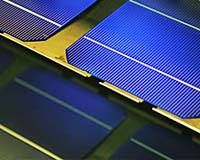
Photovoltaic cells, once so costly they could be used only to power million-dollar satellites, are today turning up even on humble parking meters. Now a brash Tempe, Ariz., company called First Solar plans to take the technology to the next level by making it cost-effective enough to compete with coal-fired generation.

Achieving grid parity--selling power to the nation's electric grid at a competitive price--has long been a holy grail of the photovoltaic industry and other suppliers of alternative energy. Yet despite the company's soaring price share and its multimilliion-dollar order book, First Solar declines to speak to journalists.

In the August issue of IEEE Spectrum, British writer Richard Stevenson combines a journalist's knack for investigation with the expertise of a solid-state physicist to piece together how First Solar has cracked the problem. He concludes that the secret involves not the photovoltaic cell itself but the way in which it is manufactured.

Instead of the familiar silicon, the design uses a compound of cadmium and tellurium. Not long ago it was little more than a laboratory curiosity, largely because nobody had found a practical way to make the cells much larger than a postage stamp. First Solar has now refined the manufacturing procedure to blow up the cells to poster size.

Already the firm has been able to make a profit selling the panels to utilities in a number of countries--particularly Germany--that subsidize alternative energy sources for environmental reasons.

Available figures suggest that the manufacturing cost per watt delivered is still too high to compete with that of power delivered on the grid, but First Solar has told investors that it expects to be able to lower the cost substantially.

It seems likely that such improvements, together with the rising price of fossil fuels generally, will enable the company to reach grid parity within just a few years.

Indeed, the technology is so promising that it puts into question whether there will be enough tellurium available to make all the solar panels the world is likely to demand. Stevenson's conclusion is that the answer is yes, because increased demand for the panels will stimulate the search for new supplies of the scarce element.

Meanwhile, other photovoltaic technologies continue to advance, not the least of which is silicon. If, as expected, the current shortage of silicon should abate in the coming years, then First Solar's clear lead on the industry may narrow. In any case, photovoltaic cells seem poised to advance from their current role in niche applications to become one of the more important sources of electricity in the world.
Related Links
IEEE Spectrum Magazine
All About Solar Energy at SolarDaily.com


Memory Foam Mattress Review
Newsletters :: SpaceDaily :: SpaceWar :: TerraDaily :: Energy Daily
XML Feeds :: Space News :: Earth News :: War News :: Solar Energy News


Clear Skies Solar Completes Solar Energy System At Hawthorne Machinery
New York NY (SPX) Jul 25, 2008
Clear Skies Solar has announced the successful installation of the Hawthorne Machinery solar energy system at the company's 25-acre headquarters in Rancho Bernardo, CA.


  • Outside View: India nuke tango -- Part 1
  • Australia looks positively at US-Indian nuclear deal
  • Thorium Power Adds Nuclear Technology Experts
  • Malaysia looking at building its first nuclear plant: report

  • Limes May Help Cut CO2 Levels Back To Pre-Industrial Levels
  • Ontario joins US carbon trading clan
  • Australia's Rudd hits out at critics of carbon trading scheme
  • Australia to set up carbon trading scheme by 2010

  • Reclaimed Wastewater Benefits Florida's Citrus Orchards
  • UN chief calls for sharp hike in world farm output
  • Pollination Habits Of Endangered Rice Revealed To Help Preservation
  • Digital Cameras And Remote Satellites Measure Crop Water Demand

  • Mangroves Key To Saving Lives
  • Machine Evolution
  • The Genetics Of The White Horse Unraveled
  • Microbes Beneath Sea Floor Genetically Distinct

  • Russia unveils new spacecraft design
  • Russian Set To Install Soyuz Launch Systems At Kourou
  • NASA Conducts Full-Scale Test Firing Of Orion Jettison Motor
  • NASA in talks for Japanese spacecraft

  • Nuclear Power In Space - Part 2
  • Outside View: Nuclear future in space
  • Nuclear Power In Space

  • GOCE Prepares For Shipment To Russia
  • NASA Works To Improve Short-Term Weather Forecasts
  • ESA To Consult The Science Community On Earth Explorer Selection
  • NASA's Deep Impact Films Earth As An Alien World

  • RT Logic Awarded South Pole TDRSS Relay II Project
  • Big Space Junk
  • APL-Operated Midcourse Space Experiment Ends
  • Tree Branching Key To Efficient Flow In Nature And Novel Materials

  • The content herein, unless otherwise known to be public domain, are Copyright Space.TV Corporation. AFP and UPI Wire Stories are copyright Agence France-Presse and United Press International. ESA Portal Reports are copyright European Space Agency. All NASA sourced material is public domain. Additional copyrights may apply in whole or part to other bona fide parties. Advertising does not imply endorsement, agreement or approval of any opinions, statements or information provided by Space.TV Corp on any Web page published or hosted by Space.TV Corp. Privacy Statement