
 Ford and DTE use the power of the sun for car production. |
The renewable energy captured by the project's primary solar energy system will help power the production of fuel-efficient small cars, including Ford's all-new Focus and Focus Electric going into production in 2011, and a next-generation hybrid vehicle and a plug-in hybrid vehicle coming in 2012.
A secondary, smaller solar energy system will be integrated at a later date to power lighting systems at Michigan Assembly.
The combined systems are expected to give Michigan Assembly the largest solar power array in Michigan and save an estimated $160,000 per year in energy costs. Installation of the system begins later this year.
"With this solar energy system, we will be able to gain vital understanding about the integration of renewable power, smart-grid technologies and energy storage at an industrial facility," said Jim Tetreault, Ford vice president, North America Manufacturing. "This project is a part of the transformation of Michigan Assembly from a large SUV factory to a modern, flexible, and sustainable small car plant."
SolarCurrents and the future of sustainability in Michigan
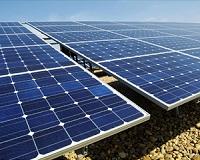
Ford will work with Detroit Edison to install a 500-kilowatt solar photovoltaic panel system at Michigan Assembly. The system will be integrated with a 750-kw energy storage facility that can store two million watt-hours of energy using batteries - enough to power 100 average Michigan homes for a year.
Xtreme Power of Austin, Texas, is supplying its Dynamic Power Resource on-site energy storage and power management system.
The solar energy installation is part of Detroit Edison's pilot SolarCurrents program that calls for photovoltaic systems to be installed on customer rooftops or property over the next five years to generate 15 megawatts of electricity throughout Southeast Michigan.
The Michigan Assembly project is made possible by a $3 million investment by Detroit Edison's SolarCurrents program, a $2 million grant from the Michigan Public Service Commission in support of the state's smart-grid initiative, and approximately $800,000 from Ford.
"Our partnership with Ford is just the latest example of how our companies have worked together to power the economic engine of Southeast Michigan," said Trevor Lauer, Detroit Edison vice president, Marketing and Renewables.
"Building solar energy systems on the scale we're pursuing will increase demand for these technologies, and we're working with the governor's office and various economic development organizations to attract renewable energy manufacturers and green jobs to Michigan."
A model for sustainable energy use
Michigan Assembly will operate on a blend of renewable and conventional electricity. The renewable energy collected by the solar system will go directly into the energy-efficient microgrid to help provide power to the plant.
When the plant is inactive, such as holidays, the collected solar energy will go into the energy storage system for later use, providing power during periods of insufficient or inconsistent sunlight.
Michigan Assembly's energy storage system will be able to recharge from the grid during off-peak hours when energy is available at a lower cost. This in turn will provide inexpensive power during peak operating hours when the cost per kilowatt-hour is higher, and reduce peak demand on the grid.
"We share a commitment with Ford to fostering an environmentally sustainable model of energy use in the U.S., and this joint project is indicative of just how far we've come," said Carlos Coe, CEO, Xtreme Power. "We are proud to work together to help transform vehicle manufacturing into a sustainable process powered by clean, renewable energy."
Solar Power to be used for electric vehicle battery charging
Ford also will install 10 electric vehicle-charging stations at Michigan Assembly to demonstrate advanced battery charging technologies using renewable energy and other smart-grid advances. The stations will be used to recharge electric switcher trucks that transport parts between adjacent facilities.
Xtreme Power will provide an active power management system on the charging stations. Ford also will demonstrate the possibility for using electrified vehicle batteries as stationary power storage devices after their useful life as vehicle power sources is over.
"Ford is strongly committed to its sustainability strategy to support positive social change and reduce the environmental impact of its products and facilities," said Sue Cischke, Ford group vice president, Sustainability, Environment and Safety Engineering. "Michigan Assembly is the latest Ford manufacturing facility to utilize renewable power for production."
Ford's Dagenham Diesel Centre in the United Kingdom was the first automotive plant in the world to obtain all of its electrical power needs from on-site wind turbines. In addition, Ford's Bridgend Engine Plant in Wales was the first site retrofitted with one of the largest integrated, grid-connected solar photovoltaic installations at a car manufacturing plant in Europe.
Since 2008, Ford has sourced renewable electricity to cover the full electric power demand at its manufacturing plant in Cologne, Germany. Through this initiative, the company is reducing its CO(2) emissions 190,000 tons per year. Renewable or green power supplies 3 percent of Ford's energy needs worldwide.
 del.icio.us del.icio.us |
 Digg Digg |
 Reddit Reddit |
 YahooMyWeb YahooMyWeb |
 Google Google |
 Facebook Facebook |

 Inventory Volatility Packs Supply-Chain Peril For Global Solar Market
| The content herein, unless otherwise known to be public domain, are Copyright 1995-2010 - SpaceDaily. AFP and UPI Wire Stories are copyright Agence France-Presse and United Press International. ESA Portal Reports are copyright European Space Agency. All NASA sourced material is public domain. Additional copyrights may apply in whole or part to other bona fide parties. Advertising does not imply endorsement,agreement or approval of any opinions, statements or information provided by SpaceDaily on any Web page published or hosted by SpaceDaily. Privacy Statement |


