|
 |
 |
 |
 |
 |
 |
 |
 |

 |
Substantial Improvement In Essential Cheap Solar Cell Process
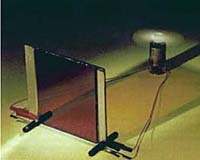
Delft, Netherlands (SPX) Mar 25, 2008 A cheap alternative to silicon solar cells can be found in dye-sensitised solar cells. This type of cell imitates the natural conversion of sunlight into energy by, for instance, plants and light-sensitive bacteria. Annemarie Huijser has succeeded in substantially improving a process in this type of solar cell, which is similar to Gr�tzel cells. Huijser will receive her PhD on this subject from TU Delft on Tuesday 25 March. The use of solar cells is increasing very slowly. One of the reasons is that the most commonly used type, made from silicon, is quite expensive to manufacture. That is why there has been a great deal of research into alternative solar cells over the past few years. In searching for solutions, scientists are inspired by nature. Plants are able to transport absorbed solar energy over long distances, typically about 15-20 nanometres, to a location in which it is converted into chemical energy. This is because the chlorophyll molecules in their leaves are arranged in the best possible sequence. During her PhD, Annemarie Huijser attempted a partial recreation in solar cells of this process as found in plants. She focused on what are known as dye-sensitised solar cells. These comprise a semiconductor, such as titanium dioxide, covered with a layer of dye. The dye absorbs energy from sunlight, which creates what are known as excitons. These energy parcels then need to move towards to the semiconductor. Once there, they generate electric power.
Lego By studying the best sequence of dye molecules, Huijser succeeded in increasing the average distance which the excitons move in the solar cell by twenty times up to a distance of approximately 20 nanometres, comparable to systems found in nature. This substantially increases the efficiency of the cells. v In order to make this new type of solar cell commercially viable, Huijser estimates that the mobility of the excitons needs to increase further by a factor of three. She believes that this is certainly possible. 'Once that has been achieved, there is nothing to stop this type of solar cell being developed further.'
Gr�tzel cells Related Links Delft University of Technology All About Solar Energy at SolarDaily.com
 Interest In Eagle Solar Roof Powered By Open Energy's SolarSave Integrated Solutions Soars
 Solana Beach CA (SPX) Mar 26, 2008
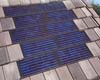
Open Energy has announced that sales of the Eagle Solar Roof are quickly gaining momentum nationwide. The Eagle Solar Roof powered by Open Energy's SolarSave Integrated Solutions provides an environmentally sound and beautiful way for homeowners to save on their electricity costs. |
|
|

| The content herein, unless otherwise known to be public domain, are Copyright Space.TV Corporation. AFP and UPI Wire Stories are copyright Agence France-Presse and United Press International. ESA Portal Reports are copyright European Space Agency. All NASA sourced material is public domain. Additional copyrights may apply in whole or part to other bona fide parties. Advertising does not imply endorsement, agreement or approval of any opinions, statements or information provided by Space.TV Corp on any Web page published or hosted by Space.TV Corp. Privacy Statement |