|
 |
 |
 |
 |
 |
 |
 |
 |

 |
Sunovia Announces NASA Solar Applications Contract
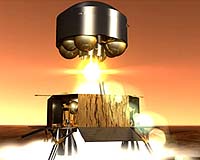
Sarasota FL (SPX) Feb 13, 2008 Sunovia Energy Technologies and EPIR Technologies are pleased to announce the execution of an agreement with the National Aeronautics and Space Administration (NASA) for the development of advanced high-efficiency, ultra-lightweight solar cells with thicknesses reduced by a factor of more than ten as compared to those currently in use. These cells will be used to power spacecraft and, in some cases, for propulsion in all NASA science missions, including the Comet Surface Sample Return (CSSR), Comet Nucleus Sample Return (CNSR), and Mars Sample Return (MASR) missions. The contract leverages EPIR's vast experience in the development of advanced light detection devices and extensive expertise in what is commonly referred to as II-VI materials. Light-detection devices and solar cells are very similar, both being designed to efficiently convert light into an electric current and differing primarily in the intensity of light available. In detectors, the current generated is used as a signal to detect the light while in solar cells the current generated is used to generate power. On January 30, Sunovia and EPIR announced the execution of an exclusive partnership that allows them to focus their talents within specific fields of expertise for the benefit of each company. The expertise within the companies in areas including II-VI materials, light detection, infrared imaging, systems integration, detector arrays and infrared (IR) sensors provides them with a marked advantage in the development of solar photovoltaic (PV) and semiconductor technologies that can be transferred to cutting-edge products. The companies are working on a unique II-VI solar PV technology with encapsulates that they believe will produce an energy conversion efficiency approaching 30 percent. That technology will build on EPIR's pioneering leadership in the growth of II-VI materials on Si for IR detectors and cameras. Further, the companies announced today the execution of an agreement that provides each company with a 10 percent equity ownership in the other. The mutual ownership further solidifies the relationship of the companies initially established by the exclusive partnership. Terms of the exclusive partnership include an equal share of ownership in any and all developed intellectual properties (patents, copyrights, unique processes, etc.), and Sunovia received the exclusive marketing rights to any and all products, existing and future. This includes solar PV, infrared, biosensors, LEDs and other advanced products and technologies. Sunovia and EPIR are developing high-efficiency solar PV technologies and advanced encapsulates based on II-VI materials that eliminate the need for many of the glass encapsulates that are prevalent in today's market. In addition, the companies are working on a transparent and electrically conductive encapsulate that could eventually eliminate the requirement for contacts on the solar cell. A number of system considerations, including weight and rigidity, make glass an impractical and inefficient system solution for solar encapsulation within the renewable energy market. Bob Fugerer, Sunovia's president, said, "The contract with NASA is great news for our shareholders and investors, and we are proud to be working with EPIR to develop advanced technologies for the United States that will improve our country's satellite and space technology systems. Our partnership with EPIR has truly enhanced our R and D efforts and I am confident that our shareholders will understand the value of this incredible organization, and its founder Dr. Sivananthan, as we move forward. The contract with NASA is a great testimony to the technology capabilities and proven track record of success for which EPIR is well known in the industry." Related Links Sunovia Energy Technologies All About Solar Energy at SolarDaily.com
 New polymer solar cell technique created
 Los Angeles (UPI) Feb 11, 2008
 U.S. scientists have created a new technique for fabricating organic polymer solar cells -- a step toward producing low-cost, plastic solar cells. |
|
|

| The content herein, unless otherwise known to be public domain, are Copyright Space.TV Corporation. AFP and UPI Wire Stories are copyright Agence France-Presse and United Press International. ESA Portal Reports are copyright European Space Agency. All NASA sourced material is public domain. Additional copyrights may apply in whole or part to other bona fide parties. Advertising does not imply endorsement, agreement or approval of any opinions, statements or information provided by Space.TV Corp on any Web page published or hosted by Space.TV Corp. Privacy Statement |