|
 |
 |
 |
 |
 |
 |
 |
 |

 |
AeroVironment Launches Production Of Its New Digital Data Link
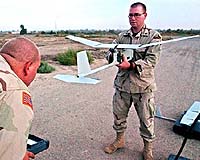
Monrovia CA (SPX) Feb 12, 2009 AeroVironment has received an order from the U.S. Army valued at $16,758,776 for the production of 50 new Raven (RQ-11B) unmanned aircraft systems (UAS) equipped with AV's Digital Data Link (DDL). Announced by the U.S. Army on January 22, 2009, this production order was issued under an existing contract and includes initial spares packages and DDL retrofit kits for 206 existing Raven systems. The introduction of AV's DDL follows several years of internally funded research and development in addition to a $7.6 million contract awarded in October 2008 for the completion of R and D activities. "This Digital Data Link enhances the capabilities of our Raven system by increasing the number of communication channels by a factor of four, enabling our customers to use more Raven systems where they need them," said John Grabowsky, executive vice president and general manager of AV's UAS segment. "Our DDL also provides enhanced communications security, and establishes the foundation for a new, highly capable and portable communications network over the battlefield. This marks the transition of an important research and development program into production." AV designed its DDL to conform to the weight, volume and power parameters of its 4.2 pound Raven small UAS. All of AV's small UAS originally employed a four-channel analog data link, limiting the number of aircraft that could be operated in a given geographical area. AV plans to develop a smaller version of its DDL that can be incorporated into its smallest production UAS, Wasp. The Raven unmanned aircraft is a 4.2-pound, backpackable, hand-launched sensor platform that provides day and night, real-time video imagery for "over the hill" and "around the corner" reconnaissance, surveillance and target acquisition in support of tactical units. U.S. armed forces use Raven systems extensively for missions such as base security, route reconnaissance, mission planning and force protection. In addition to the Raven system, AV's small UAS include Puma AE and Wasp, which are also hand-launched and controlled by AV's hand-held ground control station. Each aircraft in AV's family of small UAS is interoperable and tailored to address a variety of operational user needs. AV's UAS logistics operation supports systems deployed worldwide to ensure a consistently high level of operational readiness. AV has delivered thousands of small unmanned aircraft to date. International purchasers of Raven systems include Italy, Denmark, the Netherlands and Spain. Related Links AeroVironment UAV News - Suppliers and Technology
 Commentary: 'Wired for War'
 Washington (UPI) Feb 9, 2009
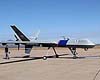
 From their cockpit at Creech Air Force Base in Nevada, the pilot and co-pilot are flying a pilotless Predator on a bombing mission over Afghanistan, 8,000 miles away. Ordnance aboard includes four Hellfire missiles and two 500-pound bombs. A forward air controller using another unmanned drone spots the target, and the Predator bomber takes off under local control from Kandahar in Afghanistan. Minutes later, control of the bomber is handed over to satellite control in the cockpit at Creech. Two hours later, the crew sees on the cockpit screen two suburban vehicles stop in front of the targeted mud-baked house. Half a dozen bearded men hurry into the dwelling, which intelligence has spotted as a Taliban command post. The ultra-sensitive cameras in the aircraft's nose show a door latch and a chicken outside. Seconds later, the bombardier in Nevada squeezes the trigger and a 500-pound bomb flattens the Taliban dwelling with a direct hit. Watching the action on identical screens are CIA operators at Langley, who can call in last-minute course corrections. |
|
|

| The content herein, unless otherwise known to be public domain, are Copyright Space.TV Corporation. AFP and UPI Wire Stories are copyright Agence France-Presse and United Press International. ESA Portal Reports are copyright European Space Agency. All NASA sourced material is public domain. Additional copyrights may apply in whole or part to other bona fide parties. Advertising does not imply endorsement, agreement or approval of any opinions, statements or information provided by Space.TV Corp on any Web page published or hosted by Space.TV Corp. Privacy Statement |