|
 |
 |
 |
 |
 |
 |
 |
 |

 |
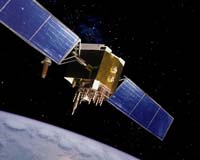
Boeing GPS IIF Satellite Completes Environmental Tests
St. Louis MO (SPX) Jul 02, 2008 Boeing has completed environmental tests of the first of 12 Global Positioning System (GPS) IIF satellites, which confirm the mechanical integrity of the spacecraft. The program is on track to deliver the first satellite to the U.S. Air Force this year. The GPS IIF team completed a series of acoustic tests that replicate the noise levels expected during the spacecraft's launch into orbit. These tests were performed under the supervision of the Air Force, the Aerospace Corporation and the Boeing team at Boeing's satellite factory in El Segundo, Calif. "These accomplishments serve as examples of the Air Force and Boeing team's diligent application of back-to-basics program management," said Craig Cooning, vice president and general manager, Boeing Space and Intelligence Systems. "Completion of these tests represents a key milestone in the test schedule for the first space vehicle that will provide modernized global positioning capability for military and civilian users." This is the third in a string of GPS IIF program accomplishments. The program recently completed a successful mechanical solar array deployment test, and delivered upgraded software for the control segment that will support the first and subsequent GPS IIF launches. Delivery of the software on March 26 occurred one month ahead of schedule. Related Links GPS Applications, Technology and Suppliers
 Rain Master's Smart Controller Outsmarts The Thief
 Simi Valley CA (SPX) Jul 02, 2008
A Rain Master Eagle-i Irrigation Controller recently stolen out of a housing development just outside of Tucson traveled nearly 80 miles before rescuing itself. The smart controller is now back in place on the wall where it was originally pinched. |
|
|

| The content herein, unless otherwise known to be public domain, are Copyright Space.TV Corporation. AFP and UPI Wire Stories are copyright Agence France-Presse and United Press International. ESA Portal Reports are copyright European Space Agency. All NASA sourced material is public domain. Additional copyrights may apply in whole or part to other bona fide parties. Advertising does not imply endorsement, agreement or approval of any opinions, statements or information provided by Space.TV Corp on any Web page published or hosted by Space.TV Corp. Privacy Statement |