|
 |
 |
 |
 |
 |
 |
 |
 |

 |
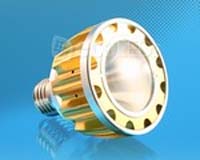
EcoLEDs Announces Brightest Commercial LED Light Bulb Yet
Tucson AZ (SPX) May 23, 2007 Eco-friendly lighting company EcoLEDs.com has launched the brightest LED light bulb ever made available to consumers in the United States. Using just 10 watts and a single LED component made in the USA, the LED light uses just 1/10th the electricity of an incandescent light bulb and reduces CO2 emissions by 9,070 pounds over its life. The EcoLEDs 10-watt LED light is available now. Incandescent light bulbs are now being globally recognized as extremely inefficient and outdated. Australia has already banned the energy-hungry light bulbs, and California is considering a state-wide ban. In time, all modern nations will ban incandescent lights due to their extreme inefficiency: they waste 95% of the electricity they consume as excess heat. The mainstream push is towards compact fluorescent lights (CFLs), but consumers are not being told that CFLs contain toxic mercury. There's enough mercury in a single CFL to contaminate 7,000 gallons of fresh water, and if Americans continue to purchase CFLs -- then throw them away in local landfills -- the United States will soon be facing an unprecedented burden of toxic mercury in rivers, streams, croplands and oceans. The solution is LED light bulbs, which contain no mercury. EcoLEDs products are also RoHS certified (Reduction of Hazardous Substances), meaning they adhere to strict European requirements for safety of materials. They last 50,000 hours before needing to be replaced, greatly reducing landfill. In combination with their ability to greatly reduce CO2 emissions, EcoLEDs lights are the obvious choice for eco-conscious consumers wishing to light their homes and businesses without contributing to global warming or contaminating their local environment with mercury. Although the LED lights seem expensive up front, they pay for themselves in 1-to-2 years in electricity savings (varies by region). Consumers running on solar (or considering installing solar) will see enormous cost savings almost immediately, since LED lights are 300% more energy efficient than even compact fluorescent lights. And because they produce no UV radiation or IR rays, they're perfect for use in museums, offices and homes. "The United States could eliminate the need to build dozens of coal-fired power plants if every household in the country simply replaced a single incandescent light bulb with an EcoLEDs light," said EcoLEDs founder Mike Adams. Related Links EcoLEDs BetterLifeGoods Powering The World in the 21st Century at Energy-Daily.com
 Alarming Acceleration In CO2 Emissions Worldwide
 Stanford, CA (SPX) May 22, 2007
Between 2000 and 2004, worldwide CO2 emissions increased at a rate that is over three times the rate during the 1990s-the rate increased from 1.1 % per year during the 1990s to 3.1% per year in the early 2000s. |
|
|

| The content herein, unless otherwise known to be public domain, are Copyright Space.TV Corporation. AFP and UPI Wire Stories are copyright Agence France-Presse and United Press International. ESA Portal Reports are copyright European Space Agency. All NASA sourced material is public domain. Additional copyrights may apply in whole or part to other bona fide parties. Advertising does not imply endorsement, agreement or approval of any opinions, statements or information provided by Space.TV Corp on any Web page published or hosted by Space.TV Corp. Privacy Statement |