
 |
 |
 |
 |
 |
 |
 |
 |
 |

 |

Seville, Spain (SPX) Dec 13, 2010 The Egyptian vulture population of the Canary Islands was established following the arrival of the first human settlers who brought livestock to the islands. A genetic comparison of Iberian and Canarian birds, published in the open access journal BMC Evolutionary Biology, found that the Egyptian vulture population in the Canary Islands was likely established around 2500 years ago - around the same time as humans began to colonise the islands. Rosa Agudo worked with a team of researchers from the Donana Biological Station, Seville, Spain, to investigate genetic and morphological changes between 143 Iberian birds and 242 from Fuerteventura, one of the Canary Islands. She said, "We found that the island vultures are significantly heavier and larger than those from Iberia. The establishment of this insular population took place some 2500 years ago, matching the date of human colonization. "Our results suggest that human activity can trigger divergent evolution and that this process may take place on a relatively brief time scale". The authors suggest that before the arrival of humans, the Canary Islands would not have been able to support vultures, as food resources would have been scarce, consisting only of the remains of seabirds and sea mammals, or of rodents. They say, "The introduction of new and abundant food sources by humans could have allowed not only colonization by vultures, but also their demographic expansion and their putative adaptation to the new island environment". For once, human activity has actually assisted in the diversification and adaptation of the Egyptian vulture, now globally threatened and classified as 'Endangered' on the IUCN Red List.
Share This Article With Planet Earth
Related Links Donana Biological Station Darwin Today At TerraDaily.com

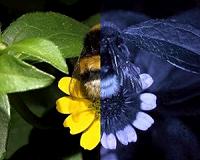 Fred Can Help Explain How A Bee Sees
London, UK (SPX) Dec 13, 2010 Bees can see colours but they perceive the world differently to us, including variations in hue that we cannot ourselves distinguish. Researchers at Queen Mary, University of London and Imperial College London have developed FReD - the Floral Reflectance Database - which holds data on what colours flowers appear to be, to bees. The development of the catalogue, which has involved a collabo ... read more |
|
|
| The content herein, unless otherwise known to be public domain, are Copyright 1995-2010 - SpaceDaily. AFP and UPI Wire Stories are copyright Agence France-Presse and United Press International. ESA Portal Reports are copyright European Space Agency. All NASA sourced material is public domain. Additional copyrights may apply in whole or part to other bona fide parties. Advertising does not imply endorsement,agreement or approval of any opinions, statements or information provided by SpaceDaily on any Web page published or hosted by SpaceDaily. Privacy Statement |


 del.icio.us
 Digg
Digg Reddit
 YahooMyWeb
 Google
 Facebook







