|
 |
 |
 |
 |
 |
 |
 |
 |

 |
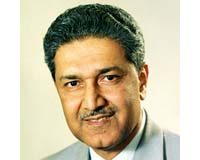
Khan must be questioned over nuclear blueprints: ex-inspector
Washington (AFP) June 16, 2008 A former arms inspector said on Monday the United States and the UN atomic watchdog must be allowed to question Pakistani scientist Abdul Qadeer Khan to learn if he sold blueprints for an advanced nuclear weapon to Iran or North Korea. Khan, the father of Pakistan's atomic bomb who was placed under house arrest for overseeing a network that sold nuclear weapons' secrets and equipment, is suspected of spreading plans for an advanced nuclear warhead in a new report by former UN arms inspector David Albright. After details of the report appeared in US newspapers, Albright said in a television interview there was a danger that Khan might be released without having to answer questions about the sensitive blueprints, which show how to build a warhead compact enough to fit on a ballistic missile. "Khan may be released from house arrest. And we may never get to the bottom of this," Albright told CNN television. "So I think it's very important that we start to put pressure on the governments involved in this to find a way to get to the bottom of it." It was "imperative" that Khan's associates cooperate with investigators and "Khan needs to be interviewed by the United States, by the International Atomic Agency," he said. The United States and European allies have never been permitted to question Khan directly. In February 2004, Khan said in a televised confession that he had run a ring that passed atomic secrets and smuggled equipment and technological advice to Iran, North Korea and Libya over a period of 15 years. But according to Albright, the blueprints dating to 2006 are far more troubling, because they offered instructions for building a coveted compact device. Such information would be extremely valuable for countries with nuclear ambitions such as Iran or North Korea, providing a shortcut to making smaller atomic weapons, Albright said. "After years of work, Pakistan learned to make the nuclear weapons smaller and lighter. And so for many countries like Iran, North Korea, that's really the challenge. "It's not hard to make a nuclear weapon per se if you have the nuclear explosive material but it can be a challenge to make it small enough to fit on the ballistic missiles they have. This is that type," he said. Albright said files found on computers by Swiss authorities prosecuting three members of Khan's network contained information about the compact nuclear warheads. "It looks like Khan did steal them (blueprints) and try to peddle them," he said. Last month, the Swiss government reportedly announced that computer files and other data seized from three men contained detailed plans for building nuclear weapons and that the files were destroyed because they posed a risk to national security and could fall into the wrong hands. Related Links Learn about nuclear weapons doctrine and defense at SpaceWar.com Learn about missile defense at SpaceWar.com All about missiles at SpaceWar.com Learn about the Superpowers of the 21st Century at SpaceWar.com
 Blueprints for advanced nukes possibly sold: report
 Washington (AFP) June 14, 2008
A report compiled by a former UN arms inspector warns that an international smuggling ring that sold bomb-related parts to Libya, Iran and North Korea also managed to acquire blueprints for an advanced nuclear weapon, The Washington Post reported Sunday. |
|
|

| The content herein, unless otherwise known to be public domain, are Copyright Space.TV Corporation. AFP and UPI Wire Stories are copyright Agence France-Presse and United Press International. ESA Portal Reports are copyright European Space Agency. All NASA sourced material is public domain. Additional copyrights may apply in whole or part to other bona fide parties. Advertising does not imply endorsement, agreement or approval of any opinions, statements or information provided by Space.TV Corp on any Web page published or hosted by Space.TV Corp. Privacy Statement |