|
 |
 |
 |
 |
 |
 |
 |
 |

 |
NASA Issues Environmental Impact Statement For Constellation
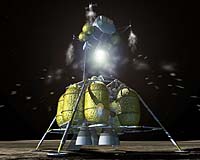
Washington DC (SPX) Jan 31, 2008 NASA issued an environmental impact statement for the Constellation Program Jan. 10. NASA's Constellation Program is developing a space transportation system that is designed to return humans to the moon by 2020. The Final Programmatic Environmental Impact Statement concludes that localized and global environmental impacts associated with implementing the program would be comparable to past or ongoing NASA activities. The National Environmental Policy Act requires federal agencies to prepare an environmental impact statement for major federal actions that may significantly affect the quality of the human environment. Federal agencies consider potential environmental impacts of their proposed actions before deciding whether and how to proceed. The statement examines the effects of development, testing and operation of spacecraft and support systems associated with Constellation Program activities through the early 2020s. NASA plans to use multiple government and contractor facilities in implementing the program. The program components to be developed include the Orion crew exploration vehicle, the Ares I crew launch vehicle, the Ares V cargo launch vehicle, the Altair lunar lander and other cargo systems. Orion will launch atop the Ares I and be capable of docking with the International Space Station or with cargo launched to low Earth orbit by the Ares V for transit to the moon, or future missions to Mars. Because the Constellation Program will be based largely upon components and facilities used by the Space Shuttle Program, the potential environmental impacts are expected to be similar. The principal activities associated with Constellation that could result in potential environmental impacts include rocket engine tests, rocket launches, construction of new facilities and modifications to existing facilities. In preparing the statement, NASA published a notice of intent in the Federal Register on Sept. 26, 2006. NASA held public scoping meetings to invite comment on environmental concerns of program alternatives on Oct. 18, 2006, in Cocoa, Fla., on Oct. 20, 2006, in Washington; and on Oct. 24, 2006, in Salt Lake City. NASA also solicited comments from federal, state, and local agencies and other interested parties. The public scoping period ended Nov. 13, 2006. NASA also published a draft environmental impact statement and took public comment on the draft in August and September 2007. Publicly identified issues resulting from the scoping meetings include the economic impact of the Constellation Program on local jobs near NASA centers, risks to the public through launch and reentry of the Orion spacecraft, noise associated with launch events and impacts to animals in the Kennedy Space Center, Fla., area from construction and launch activities. Other issues included the socio-economic impacts of decommissioning the space shuttle and implementing the Constellation Program. The Final Programmatic Environmental Impact Statement contains an appendix that lists public comments and NASA's responses. NASA expects to provide a formal record of decision for the Constellation Program in late spring 2008. Related Links NASA's Constellation Program EIS impact statement Space Tourism, Space Transport and Space Exploration News
 Innovative Tools For An Out-Of-This-World Job
 Greenbelt MD (SPX) Jan 29, 2008
Think of the average handyman, who relies on a standard set of tools -- screw drivers, socket wrenches, power drills -- to get the job done. But when you're working in space, the average tools just won't cut it. Our specially trained handymen are astronauts, and they need specialty tools to accomplish out-of-this-world tasks. |
|
|

| The content herein, unless otherwise known to be public domain, are Copyright Space.TV Corporation. AFP and UPI Wire Stories are copyright Agence France-Presse and United Press International. ESA Portal Reports are copyright European Space Agency. All NASA sourced material is public domain. Additional copyrights may apply in whole or part to other bona fide parties. Advertising does not imply endorsement, agreement or approval of any opinions, statements or information provided by Space.TV Corp on any Web page published or hosted by Space.TV Corp. Privacy Statement |