
 |
 |
 |
 |
 |
 |
 |
 |
 |

 |
New Fossil Reveals Primates Lingered In Texas
Austin TX (SPX) Oct 22, 2008 More than 40 million years ago, primates preferred Texas to northern climates that were significantly cooling, according to new fossil evidence discovered by Chris Kirk, physical anthropologist at The University of Texas at Austin. Kirk and Blythe Williams from Duke University have discovered Diablomomys dalquesti, a new genus and species of primate that dates to 44-43 million years ago when tropical forests and active volcanoes covered west Texas. The researchers have published their discovery in the Journal of Human Evolution article, "New Uintan Primates from Texas and their Implications for North American Patterns of Species Richness during the Eocene." During the early part of the Eocene epoch, primates were common in the tropical forests that covered most of North America. Over time, however, climatic cooling caused a dramatic decline in the abundance and diversity of North American primates. By the end of the Eocene, primates and most tropical species had almost disappeared from North America. Kirk's discovery of late middle Eocene (Uintan) primates at the Devil's Graveyard Formation in Southwest Texas reveals new information about how North American primates evolved during this period of faunal (animal) reorganization. "After several years of collecting new fossils, reviewing Texas' primate community and comparing it to other places in North America, we found a much more diverse group of primate species in Texas than we expected," Kirk said. "It seems that primates stuck around in Texas much longer than many other parts of the continent because the climate stayed warm for a longer period of time. While primate diversity was falling off precipitously in places like Utah and Wyoming during the late middle Eocene, west Texas provided a humid, tropical refuge for primates and other arboreal (tree-inhabiting) animals." The anthropologists named the new primate Diablomomys dalquesti, combining "Diablo" to represent the Devil's Graveyard Formation (sand- and mudstones near Big Bend National Park) with Omomys, a related fossil genus. The dalquesti species name honors Walter and Rose Dalquest, who donated the land on which the fossil was collected (Midwestern State University's "Dalquest Research Site"). Walter was a Texas paleontologist and distinguished biology professor at Midwestern State University in Wichita Falls until his death in 2000. Related Links University of Texas at Austin Darwin Today At TerraDaily.com
 Genes Hold Secret Of Survival Of Antarctic Antifreeze Fish
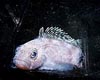 Champaign IL (SPX) Oct 22, 2008
A genetic study of a fish that lives in the icy waters off Antarctica sheds light on the adaptations that enable it to survive in one of the harshest environments on the planet. |
|
|

| The content herein, unless otherwise known to be public domain, are Copyright Space.TV Corporation. AFP and UPI Wire Stories are copyright Agence France-Presse and United Press International. ESA Portal Reports are copyright European Space Agency. All NASA sourced material is public domain. Additional copyrights may apply in whole or part to other bona fide parties. Advertising does not imply endorsement, agreement or approval of any opinions, statements or information provided by Space.TV Corp on any Web page published or hosted by Space.TV Corp. Privacy Statement |

