|
 |
 |
 |
 |
 |
 |
 |
 |

 |
New Spaceship Force Field Makes Mars Trip Possible
London, UK (SPX) Nov 05, 2008 According to the international space agencies, "Space Weather" is the single greatest obstacle to deep space travel. Radiation from the sun and cosmic rays pose a deadly threat to astronauts in space. New research, out today, Tuesday, November 4, published in IOP Publishing's Plasma Physics and Controlled Fusion, shows how knowledge gained from the pursuit of nuclear fusion research may reduce the threat to acceptable levels, making man's first mission to Mars a much greater possibility. The solar energetic particles, although just part of the 'cosmic rays' spectrum, are of greatest concern because they are the most likely to cause deadly radiation damage to the astronauts. Large numbers of these energetic particles occur intermittently as "storms" with little warning and are already known to pose the greatest threat to man. Nature helps protect the Earth by having a giant "magnetic bubble" around the planet called the magnetosphere. The Apollo astronauts of the 1960's and 70's who walked upon the Moon are the only humans to have travelled beyond the Earth's natural "force field" - the Earth's magnetosphere. With typical journeys on the Apollo missions lasting only about 8 days, it was possible to miss an encounter with such a storm; a journey to Mars, however, would take about eighteen months, during which time it is almost certain that astronauts would be enveloped by such a "solar storm". Space craft visiting the Moon or Mars could maintain some of this protection by taking along their very own portable "mini"-magnetosphere. The idea has been around since the 1960's but it was thought impractical because it was believed that only a very large (more than 100km wide) magnetic bubble could possibly work. Researchers at the Science and Technology Facilities Council's Rutherford Appleton Laboratory, the Universities of York, Strathclyde and IST Lisbon, have undertaken experiments, using know-how from 50 years of research into nuclear fusion, to show that it is possible for astronauts to shield their spacecrafts with a portable magnetosphere - scattering the highly charged, ionised particles of the solar wind and flares away from their space craft. Computer simulations done by a team in Lisbon with scientists at Rutherford Appleton last year showed that theoretically a very much smaller "magnetic bubble" of only several hundred meters across would be enough to protect a spacecraft. Now this has been confirmed in the laboratory in the UK using apparatus originally built to work on fusion. By recreating in miniature a tiny piece of the Solar Wind, scientists working in the laboratory were able to confirm that a small "hole" in the Solar Wind is all that would be needed to keep the astronauts safe on their journey to our nearest neighbours. Dr. Ruth Bamford, one of the lead researchers at the Rutherford Appleton Laboratory, said, "These initial experiments have shown promise and that it may be possible to shield astronauts from deadly space weather". Related Links Institute of Physics Space Tourism, Space Transport and Space Exploration News
 Neil Armstrong Gives Papers To Purdue Libraries
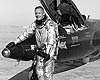 West Lafayette IN (SPX) Nov 04, 2008
The personal story of the first person to land a craft on the moon and to step on its surface will live forever - in the Purdue University Libraries. |
|
|

| The content herein, unless otherwise known to be public domain, are Copyright Space.TV Corporation. AFP and UPI Wire Stories are copyright Agence France-Presse and United Press International. ESA Portal Reports are copyright European Space Agency. All NASA sourced material is public domain. Additional copyrights may apply in whole or part to other bona fide parties. Advertising does not imply endorsement, agreement or approval of any opinions, statements or information provided by Space.TV Corp on any Web page published or hosted by Space.TV Corp. Privacy Statement |