|
 |
 |
 |
 |
 |
 |
 |
 |

 |
Ozone hole larger in 2008 than previous year: WMO
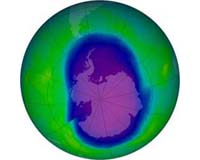
Geneva (AFP) Sept 16, 2008 The ozone hole is larger in 2008 than the previous year but is not expected to reach the size seen two years ago, the World Meteorological Organisation said Tuesday. "In 2008, the ozone hole appeared relatively late. However, during the last couple of weeks it has grown rapidly and has now passed the maximum size attained in 2007," the WMO said in a statement. The hole in the layer over the Antarctic was discovered in the 1980s. It regularly tends to form in August, reaching its maximum size late September or early October before it fills again in mid-December. The size it reaches is dependent on weather conditions. Experts warned that such is the damage to the ozone layer, which shields the Earth from harmful ultra-violet rays, it will only attain full recovery in 2075. "It would take decades for the hole to disappear and for it to return to the situation before 1980. We are looking at 2075," Geir Braathen, who is the World Meteorological Organisation's expert on the subject told AFP. On September 13, the hole covered an area of 27 million square kilometers, while in 2007, the maximum reached was 25 million square kilometers, said the WMO. "Since the ozone hole is still growing, it is too early to determine how large this year's ozone hole will be," it added. Ozone provides a natural protective filter against harmful ultra-violet rays from the sun, which can cause sunburn, cataracts and skin cancer and damage vegetation. Its depletion is caused by extreme cold temperatures at high altitude and a particular type of pollution, from chemicals often used in refrigeration, some plastic foams, or aerosol sprays, which have accumulated in the atmosphere. Most of these chemicals, chlorofluorocarbons (CFCs), are being phased out under the 1987 Montreal Protocol, but they linger in the atmosphere for many years. Related Links All about the Ozone Layer
 WMO expects 'normal' ozone hole over Antarctica in 2008
 Geneva (AFP) Aug 29, 2008
The World Meteorological Organisation said Friday it expects the ozone hole over Antarctica to be "normal" this year, two years after it reached record size. |
|
|

| The content herein, unless otherwise known to be public domain, are Copyright Space.TV Corporation. AFP and UPI Wire Stories are copyright Agence France-Presse and United Press International. ESA Portal Reports are copyright European Space Agency. All NASA sourced material is public domain. Additional copyrights may apply in whole or part to other bona fide parties. Advertising does not imply endorsement, agreement or approval of any opinions, statements or information provided by Space.TV Corp on any Web page published or hosted by Space.TV Corp. Privacy Statement |