
 |
 |
 |
 |
 |
 |
 |
 |
 |

 |
Simple Reason Helps Males Evolve More Quickly
Gainesville FL (SPX) Nov 16, 2007 The observation that males evolve more quickly than females has been around since 19th century biologist Charles Darwin noted the majesty of a peacock's tail feather in comparison with the plainness of the peahen's. No matter the species, males apparently ramp up flashier features and more melodious warbles in an eternal competition to win the best mates, a concept known as sexual selection. Why males are in evolutionary overdrive even though they have essentially the same genes as females has been a mystery, but an explanation by University of Florida Genetics Institute researchers to appear online in the Proceedings of the National Academy of Sciences this week may shed light on the subject. "It's because males are simpler," said Marta Wayne, an associate professor of zoology in the College of Liberal Arts and Sciences and director of UF's Graduate Program in Genetics and Genomics. "The mode of inheritance in males involves simpler genetic architecture that does not include as many interactions between genes as could be involved in female inheritance." The finding may also be useful to scientists studying why diseases may present themselves or respond to treatment differently in men and women. Researchers examined how gene expression is inherited differently in male and female fruit flies using microarray analysis, which is a way to monitor the activity of thousands of genes simultaneously. The flies were identical genetically, except that females have two X chromosomes and males have a single X and a single Y chromosome. It turns out that the extra X in females may make answering the call of selection more complicated. In flies or humans, sex cells from a mother and a father combine to make what eventually becomes an embryo. Females are equipped with two versions of X-linked genes that interact not only with each other, but also with other genes. Males have only one version of the X chromosome, making for fewer interactions and more straightforward male inheritance, especially since the male's Y chromosome contains very few genes. "In females, a dominant allele can hide the presence of a recessive allele," said Lauren McIntyre, an associate professor of molecular genetics and microbiology in UF's College of Medicine. "In contrast to females, which have two X chromosomes, one inherited from each parent, males have only one X inherited only from their mother. This is a simple mechanism that could be working in cooperation with sexual selection to help males evolve more quickly." Researchers believe this relatively uncomplicated genetic pathway helps males respond to the pressures of sexual selection, ultimately enabling them to win females and produce greater numbers of offspring. Relationships between gene expression and modes of inheritance have been addressed before, but this study analyzed an extremely large data set that involved most of the genes in the fruit fly genome, said David Rand, a professor of biology at Brown University who was not involved in the study. "This research shows how recessive and dominant traits are important in determining variation in populations," Rand said. "The best way to think of it is males play with one card, but females get to play one and hold one. If males have got a good trait, it's promoted; something bad, it's eliminated. In females you can have a bad card, but a good card can protect it. As a result, females can carry deleterious traits but not express them." UF scientists analyzed 8,607 genes that are shared by both sexes of a fruit fly called Drosophila melanogaster. Of those genes, 7,617 are expressed differently -- meaning the same genes do different things -- in males and females. Over the years, fruit fly research has helped scientists understand the role of genes in diseases, development, population genetics, cell biology, neurobiology, behavior and evolution. Humans share more than 65 percent of their genes with the fruit fly, including many implicated in certain cancers, Alzheimer's disease and heart disease. The finding helps explain fundamental processes that may factor into why men and women may show different symptoms or respond differently to diseases. "There's a health aspect in figuring out differences in gene expression between the sexes," said Wayne. "To make a male or a female, even in a fly, it's all about turning things on -- either in different places or different amounts or at different times -- because we all basically have the same starting set of genes." Related Links University of Florida Darwin Today At TerraDaily.com
 Dinosaur From Sahara Ate Like A Mesozoic Cow
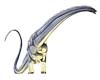 Washington DC (SPX) Nov 16, 2007
A 110 million-year-old dinosaur that had a mouth that worked like a vacuum cleaner, hundreds of tiny teeth and nearly translucent skull bones will be unveiled Thursday, Nov. 15, at the National Geographic Society. Found in the Sahara by National Geographic Explorer-in-Residence Paul Sereno, paleontologist and professor at the University of Chicago, the dinosaur is a plant eater known as Nigersaurus taqueti. |
|
|

| The content herein, unless otherwise known to be public domain, are Copyright Space.TV Corporation. AFP and UPI Wire Stories are copyright Agence France-Presse and United Press International. ESA Portal Reports are copyright European Space Agency. All NASA sourced material is public domain. Additional copyrights may apply in whole or part to other bona fide parties. Advertising does not imply endorsement, agreement or approval of any opinions, statements or information provided by Space.TV Corp on any Web page published or hosted by Space.TV Corp. Privacy Statement |

