
 |
 |
 |
 |
 |
 |
 |
 |
 |

 |
Successful Rocket Motor Test Helps NASA's Shuttle And ARES I
Huntsville AL (SPX) Nov 02, 2007 NASA's Space Shuttle Program successfully fired a four-segment reusable solid rocket motor Thursday, Nov. 1, at a Utah test facility. The two-minute test provided important information for continued launches of the shuttle and for development of the Ares I rocket, a key component of NASA's Constellation Program that will launch the Orion crew vehicle on missions to the moon. The static firing of the full-scale motor was performed at 1 p.m. MDT at ATK Launch Systems Group, a Promontory, Utah-based unit of Alliant Techsystems Inc., where the shuttle's solid rocket motors are manufactured. Preliminary indications are that all test objectives for shuttle and Ares I were met. The test evaluation motor, or TEM-13, burned for approximately 123 seconds, the same time each reusable solid rocket motor burns during a space shuttle launch. The Reusable Solid Rocket Booster Project Office at NASA's Marshall Space Flight Center in Huntsville, Ala., manages these tests to qualify any proposed changes to the rocket motor and to determine whether new materials perform as well as those now in use. "Full-scale static testing such as this is a key element of the 'test before you fly' standard and ensures continued quality and performance," said Jody Singer, deputy manager of the Shuttle Propulsion Office at Marshall. One test objective was to demonstrate the thrust vector control system operation using only one of two hydraulic power units. The vector control, part of the flight control system, directs the thrust of the two solid rocket booster nozzles to control shuttle attitude and trajectory during liftoff and ascent. During a shuttle launch, both hydraulic power units run and provide backup power to thrust vector control actuators. The test with only one hydraulic power unit will validate the system's redundancy capability and operating performance data. Another test objective was to measure the external sound or acoustics created when the motor ignites. More than 25 microphones were located near the motor to record the data from the firing. This information will be used to predict the motor's acoustic effects and aid in the final design of the launch structure for Ares I. After final test data are analyzed, NASA will publish results for each objective in a report available later this year. Related Links Constellation Program Rocket Science News at Space-Travel.Com
 New Carrier Rocket Series To Be Built
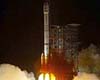 Beijing (XNA) Nov 01, 2007
A week after the launch of the first lunar orbiter, the government announced Tuesday the building of a new family of rocket launchers and a launch center. The Long March 5 carrier rockets will be made in the northern coastal city of Tianjin while the new launch center will be located in the southernmost province of Hainan. |
|
|

| The content herein, unless otherwise known to be public domain, are Copyright Space.TV Corporation. AFP and UPI Wire Stories are copyright Agence France-Presse and United Press International. ESA Portal Reports are copyright European Space Agency. All NASA sourced material is public domain. Additional copyrights may apply in whole or part to other bona fide parties. Advertising does not imply endorsement, agreement or approval of any opinions, statements or information provided by Space.TV Corp on any Web page published or hosted by Space.TV Corp. Privacy Statement |

