
 |
 |
 |
 |
 |
 |
 |
 |
 |

 |
Thompson Files: Don't cut back on tanks
Arlington, Va. (UPI) Oct 28, 2008 Pentagon policymakers tentatively decided last weekend to terminate a competition for the military's next generation of communications satellites. The program was supposed to give each warfighter easy, secure access to the global information grid as part of the joint force's migration to networked warfare. The plan now is to restart the satellite program as a less costly effort on a stretched-out schedule, but the more likely outcome is that the program simply dies for lack of support in the new administration. That would be a real tragedy, leading to the avoidable deaths of many warfighters who cannot obtain timely links via other means. Setting aside the utter lack of transparency in this last, misguided decision by a failed administration, what lesson might be learned from the satellite's termination? Simply this: Costly and complicated military technology programs usually don't unfold as planned. They take so long to develop that there are many opportunities for politicians and policymakers to revise budgets and rewrite requirements. So the programs reach the field later than expected, in a different form than originally anticipated. Which brings me to the centerpiece of U.S. Army modernization: Future Combat Systems. FCS is a family of agile combat vehicles linked by a powerful wireless network that was conceived to make the ground force far more flexible, versatile, survivable and deployable than it ever was before. Prime contractor Boeing has achieved the nearly impossible goal of keeping the program on schedule and on budget despite multiple restructurings, and as a result it has gradually gained support both in the service and on Capitol Hill. That support is readily apparent in the U.S. Army's proposed spending plan for 2010-2015, which, as Kris Osborn of Defense News has reported, shifts billions of dollars out of existing armored programs to keep FCS on track. But Future Combat Systems is an exceedingly complex "system of systems" that makes the canceled satellite program look simple by comparison. While there is little doubt that the Army needs such a program to fight effectively in the future, there is also little doubt it will encounter problems of one sort or another before fully coming to fruition. In fact, loss of the connectivity that would have been provided by the canceled satellite is one such problem. Planners say they can work around the communications gap, but that will take time. So how wise is it to scale back existing armored programs like Stryker, Bradley Fighting Vehicles and Abrams Main Battle Tanks when even optimists concede those vehicles will be needed for decades to come? In the U.S. Army's defense, it doesn't want to have an unbalanced modernization plan. It would prefer to fund upgrades for existing armor while also keeping the leap-ahead capabilities of Future Combat Systems on schedule. But the Army doesn't have the money to do that, especially with war-related supplemental appropriations likely to disappear in the near future and a major increase in troop strength under way. So it has opted to accept risk in the near term in order to pursue the promise of the Future Combat Systems. For example, plans to replace decrepit M113 vehicles with Strykers and Bradley Fighting Vehicles will be deferred, even though an internal assessment found the M113 suffers from "survivability shortfalls" that can't be fixed because of weight and space constraints. "Survivability shortfalls" is a bureaucratic way of saying soldiers will die if they are forced to keep using such vehicles. As with warfighters who will be denied the superior connectivity afforded by the canceled satellites, the Pentagon is sacrificing lives to save money. It makes sense to keep the Future Combat Systems programs on track, because it was designed with soldier protection in mind. But in the meantime, the U.S. Department of Defense shouldn't be underfunding programs that we know will be crucial to the survival and success of America's soldiers. (Loren B. Thompson is chief executive officer of the Lexington Institute, an Arlington, Va.-based think tank that supports democracy and the free market.) Related Links The latest in Military Technology for the 21st century at SpaceWar.com
 New fighter jet hope for long-legged Dutch
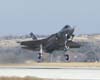 The Hague (AFP) Oct 28, 2008
Changes to the cockpit of a new fighter jet could offer hope to would-be pilots who are turned down for the Dutch air force because their legs are too long, an official said Tuesday. |
|
|

| The content herein, unless otherwise known to be public domain, are Copyright Space.TV Corporation. AFP and UPI Wire Stories are copyright Agence France-Presse and United Press International. ESA Portal Reports are copyright European Space Agency. All NASA sourced material is public domain. Additional copyrights may apply in whole or part to other bona fide parties. Advertising does not imply endorsement, agreement or approval of any opinions, statements or information provided by Space.TV Corp on any Web page published or hosted by Space.TV Corp. Privacy Statement |

