|
 |
 |
 |
 |
 |
 |
 |
 |

 |
US teacher gives first lesson from space
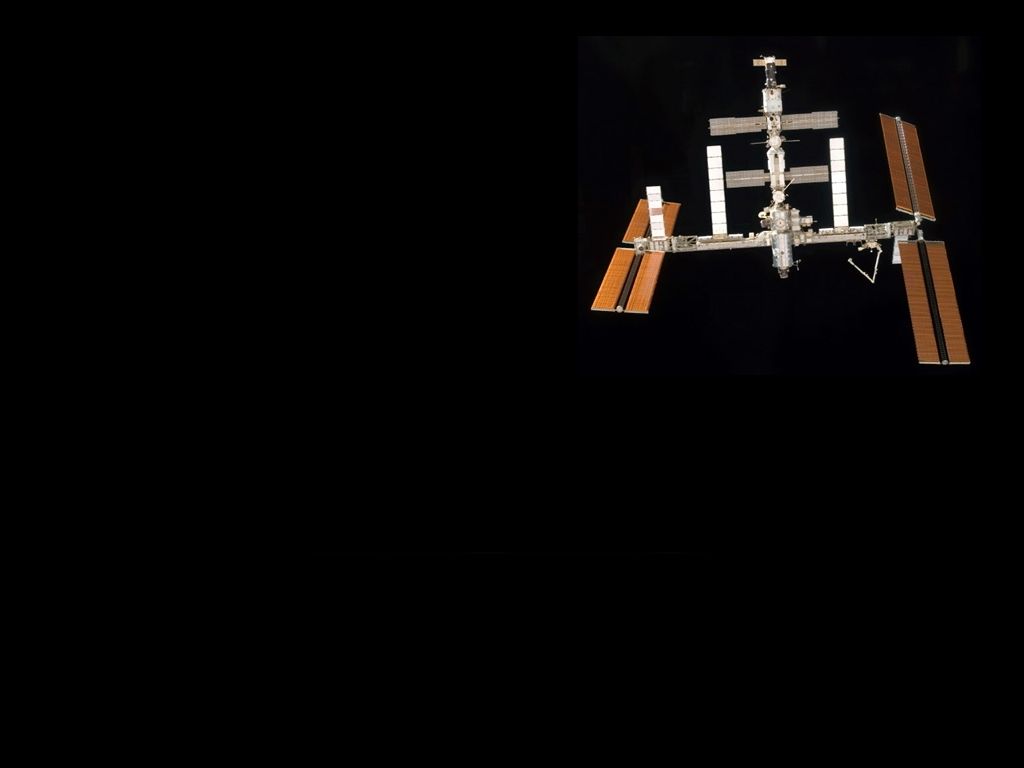
Washington (AFP) Aug 15, 2007 The first teacher in space taught her first lesson in zero-gravity Tuesday, answering questions from school children in Idaho from the orbiting International Space Station hundreds of miles above Earth. Barbara Morgan, flanked by crewmates Alvin Drew and Dave Williams, talked for 25 minutes to children at the Discovery Center in Boise, Idaho, the northwestern state where Morgan taught at a primary school early in her career. "Astronauts and teachers actually do the same thing. We explore, we discover and we share," she told the class via videolink. "Those are absolutely wonderful jobs." Morgan, now 55, trained as understudy to fellow teacher Christa McAuliffe in the 1980s as the National Aeronautic and Space Administration hoped that sending a teacher into space would fire the imaginations of millions and keep up support for its shuttle program. But McAuliffe never made it to space. The Challenger shuttle exploded shortly after take-off in 1986, killing all seven people on board. Twenty-two years later, Morgan has fulfilled the aim, riding aboard the shuttle Endeavour on a construction mission to the International Space Station. In a session broadcast to Earth by the US space agency, she fielded questions such as how fast a baseball travels in space and how to drink in zero gravity weightlessness. She and her fellow astronauts demonstrated, throwing real balls and swallowing floating bubbles of liquid. Asked how astronauts exercise in space, Morgan grabbed one of her colleagues and lifted him. Morgan returned to teaching after the Challenger disaster but in the 1990s started six years of training in the astronaut corps. She is the star of this year's second shuttle mission to the ISS. As Morgan taught her lesson NASA officials on Earth sought to deal with launch damage to the shuttle. Late Tuesday mission chief John Shannon said his team was "cautiously optimistic" that astronauts will not have to undertake repairs to the damaged area on Endeavour's heat shield, an official said Tuesday. "We are still looking at the tile damage," Shannon told a news conference, referring to the 8.75 by 5.0 centimeter (3.5 by 2.0 inch) gouge near a landing gear's hatch. "We are cautiously optimistic that we can fly as it is," he said after seeing the results of aerodynamic and thermal assessments of the damaged area. NASA officials will continue to analyze data and recheck calculations regarding the vulnerability of the ship upon reentry. They expect to announce a decision late Wednesday on whether or not to send astronauts on a space walk to mend the problem. The concern is that the gash could result in excess friction as the shuttle hurtles into the Earth's atmosphere at high speeds, though NASA has said the problem "poses no threat to crew safety or mission operations." Shannon said there was little doubt that an in-space repair job could be done. "I feel comfortable we can execute the repair if required." If a repair job is required, NASA will have three astronauts on Earth undertake the operation in a mockup of the shuttle to sort out the logistics and possible problems. NASA officials said the gouge was likely caused by a 100 gram (3.5 ounce) piece of foam, or foam with ice, that broke from the external fuel tank 58 seconds into the shuttle's launch on August 8. Earlier reports characterized the debris as just ice. The damage to the heat shield has evoked the February 2003 Columbia disaster, when broken tiles on that shuttle's heat shield led to its disintegration upon its return from space, killing the seven astronauts aboard and putting in limbo the shuttle program for nearly 18 months. Related Links Space Tourism, Space Transport and Space Exploration News
 NASA Issues Draft Environmental Impact Statement For Constellation Programme
 Washington DC (SPX) Aug 15, 2007
NASA has issued a draft environmental impact statement on potential environmental impacts associated with the Constellation Program. NASA's Constellation Program is developing a space transportation system that is designed to return humans to the moon by 2020. The Draft Programmatic Environmental Impact Statement concludes that localized and global environmental impacts associated with implementing the Constellation Program would be comparable to past or ongoing NASA activities. |
|
|

| The content herein, unless otherwise known to be public domain, are Copyright Space.TV Corporation. AFP and UPI Wire Stories are copyright Agence France-Presse and United Press International. ESA Portal Reports are copyright European Space Agency. All NASA sourced material is public domain. Additional copyrights may apply in whole or part to other bona fide parties. Advertising does not imply endorsement, agreement or approval of any opinions, statements or information provided by Space.TV Corp on any Web page published or hosted by Space.TV Corp. Privacy Statement |